

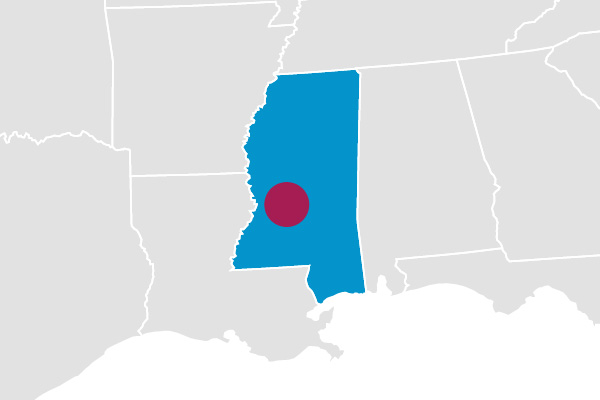
 Hinds County, Madison County, and Rankin County—the three counties that make up the Jackson, MS metropolitan statistical area (MSA)

The Jackson Heart Study (JHS) is a large, community-based, observational cohort study designed to better understand cardiovascular health and disease—along with related conditions and risk factors—among African American adults living in and around Jackson, Mississippi.
Study Setting and Catchment AreaParticipants were recruited from both urban and rural communities across Hinds County, Madison County, and Rankin County—the three counties that make up the Jackson, MS metropolitan statistical area (MSA).
Recruitment Strategy and Cohort CompositionEnrollment drew from four recruitment pools to create a broad, community-representative cohort:

Recruitment was limited to non-institutionalized African American adults ages 35–84, except for the family cohort where adults ages 21–34 were eligible. The final cohort includes 5,306 participants, representing 6.59% of African American Jackson MSA residents aged 35–84 (U.S. Census 2000).
Clinical Exams and What’s MeasuredAt major exam visits, JHS collects a rich combination of clinical, laboratory, and sociocultural data. Major components include:
Medical history and physical examination
Blood and urine analytes
Structured interviews covering topics such as physical activity; stress, coping, and spirituality; racism and discrimination; socioeconomic position; and access to health care
These measures enable researchers to study not only traditional cardiovascular risk factors, but also how social and environmental contexts shape health over time.
Annual Follow-Up and Ongoing SurveillanceJHS maintains ongoing contact with participants to ensure longitudinal accuracy and completeness:

Annual (12-month interval) telephone follow-ups to update information, confirm vital status, and document interim medical events, hospitalizations, and functional status
Repeated annual questions on medical events, cardiovascular symptoms, and functional status
Ongoing cohort surveillance through abstraction of medical records and death certificates for relevant ICD codes
Adjudication of nonfatal events and deaths to support consistent, research-grade outcome definitions
This combination of participant follow-up and record-based surveillance strengthens the study’s ability to evaluate incident disease and long-term health trajectories.
Genetics and Family StructureJHS includes a nested family component, enabling analyses of heritable and familial contributions to cardiovascular and related traits. DNA has been obtained from consenting participants and is used to investigate genetic factors associated with conditions such as high blood pressure, heart disease, stroke, and diabetes.
JHS data and materials are maintained under joint stewardship by the JHS institutions and the National Heart, Lung, and Blood Institute (NHLBI). Use of these resources is guided by policies intended to support rapid scientific progress while protecting participants and ensuring appropriate oversight.
Data Access and RequestsResearchers can request customized datasets and related support through the JHS data request mechanism. This process helps JHS assess requested data elements, intended analyses, and any additional resources needed prior to release.
Ancillary StudiesAncillary studies typically involve collection of new information (e.g., additional interviews, exams, or assays) or use of materials (e.g., biospecimens or images) that are not part of the standard JHS dataset, and they follow the same review and approval expectations as the core JHS protocol.
Publications and PresentationsJHS provides structured guidance for manuscript proposals, abstract submissions, and approval workflows. These guidelines outline steps and review processes designed to ensure appropriate use, attribution, and coordination when publishing or presenting JHS-based findings.
Study Components, Manuals, and FormsResearchers can also access resources that describe what was collected at each exam and how data were obtained—including manuals of operation and study forms—supporting transparency, reproducibility, and proper variable interpretation.